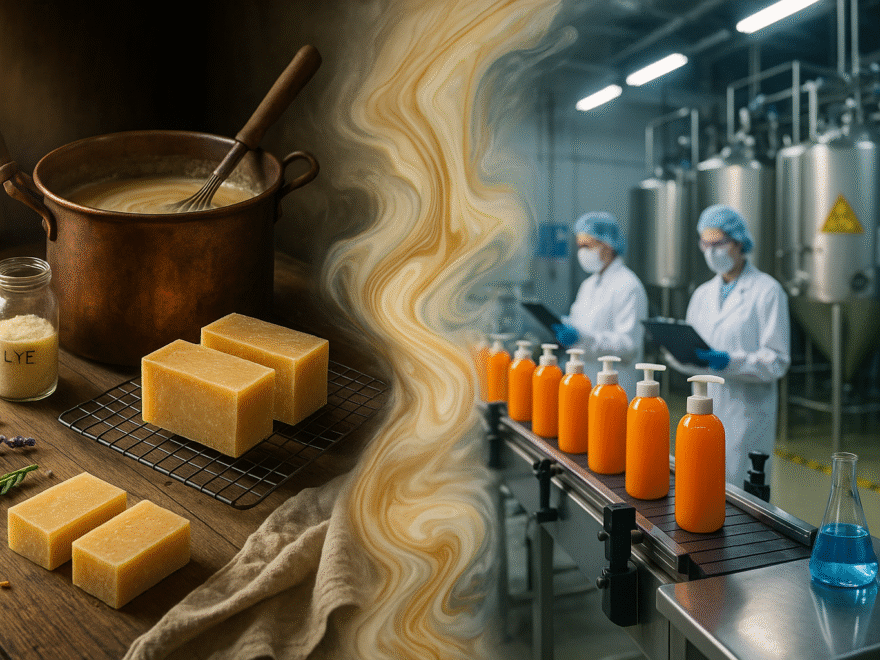
Remember When Soap Was Just Soap
There was a time when soap was a short story. Oil, lye, water, a little salt, maybe a hint of scent, nothing dramatic. You washed, you rinsed, you moved on with your day. Nowadays the store aisle reads like a chemistry midterm. Moisture beads, micro pearls, activated foam technology, and a paragraph of ingredients that need a magnifying glass. We turned a basic human habit into a lab experiment, then wondered why our skin feels like it needs a lawyer.
What Went Sideways
Mass production chases shelf life, foam, and fragrance before it chases skin health. That is why many commercial bars are not actually soap, they are detergent cakes built to lather in hard water and survive a warehouse. The label often includes synthetic surfactants for big bubbles, heavy fragrance for big smell, dyes for bright colour, preservatives for long storage, and a host of stabilizers to keep the whole thing from separating. None of that makes your skin cleaner. It makes the product cheaper to produce and easier to market.
Common offenders show up again and again. Strong synthetic fragrance blends that stick around longer than the in-laws. Loud dyes that do nothing but stain your shower drain. Harsh surfactants that strip oil like a degreaser. Antibacterial additives that your skin never asked for. The result is tightness, irritation, and a cycle of buy one product to dry it out, buy another to fix what the first one did.
Real Soap In Plain English
Real soap is made by saponification. You combine fats or oils with sodium hydroxide and water, which creates soap and glycerin. The magic is not marketing, it is chemistry doing what it has done for centuries. When made correctly, there is no free lye left, only a balanced bar that cleans without scraping your face off. The natural glycerin that forms is a humectant, it helps your skin hold on to moisture. Large factories often remove that glycerin and sell it to another industry. Small makers tend to keep it. Your skin can tell the difference.
Short Ingredients Beat Long Promises
Great bars read like a shopping list you can pronounce. Olive oil for a gentle clean. Coconut oil for bubbles. Shea or cocoa butter for conditioning. Maybe a clay for slip, salt for hardness, ground oats for a soft scrub. Scent, if used, comes from essential oils or clean fragrance oils used with restraint. No neon dyes, no glitter, no mystery glaze. Your skin does not need fireworks, it needs balance.
The Waterford Fix. Dirty Girl Soap Studio
If you want proof that simple still works, look local. Dirty Girl Soap Studio in Waterford, Ontario, keeps it clean and keeps it honest. Small batches, short labels, bars that feel good on day one and day thirty. No gimmicks. No wild claims. The focus is quality oils, proper technique, and scents that smell like real life rather than a mall kiosk. This is handmade soap for people who are tired of bathing in buzzwords, made right at home in Canada.
You can tell there is a maker behind the bar, not a committee. The cut is tidy. The cure is patient. The scents do not slap you, they greet you. The bar leaves your skin calm, not squeaky. That is what happens when craft leads and filler stays out of the room.
How To Read A Label Without Needing Coffee
- Look for oils you recognize near the top. Olive, coconut, tallow, lard, sunflower, shea, cocoa.
- Expect to see sodium hydroxide or “saponified oils.” It was used to create the soap, it is not present as a free ingredient in the finished bar.
- Glycerin is a good sign. If it is missing, it was likely removed.
- Fragrance should be short and sensible. If the scent list reads like a novel, put it back.
- Colorants should be clear. Clays, botanicals, charcoal. If every shade of the rainbow is crammed in, ask why.
- Avoid “beauty bar,” “cleansing bar,” and similar language that dodges the word soap. That often signals a detergent base.
Why Handmade Wins In Daily Use
Handmade bars are not about romance, they are about function. They tend to be superfatted, which means a small percentage of extra oil is left unreacted to soften the feel. They keep glycerin, which helps your skin behave. They use modest scent levels, which keeps irritation down. They are designed for skin, not for packaging.
And yes, they last when you treat them right. Use a draining dish. Keep the bar dry between uses. Cut a bar in half to rotate pieces. That simple routine beats any plastic bottle promising eternal youth.
The Anti Chemical Stance, Without The Tinfoil Hat
You do not have to believe that every synthetic is the villain to see the obvious. If your daily wash can be made with five ingredients from a pantry and a hardware store, why are you rubbing twenty seven extras on your largest organ. There is no prize for the longest label. There is no need for bright blue dye in a bar that goes down the drain. Keep what cleans, skip what sells.
A Simple Skin Habit That Actually Works
- Choose a real soap with a short, readable list.
- Wash with warm water, not hot.
- Rinse well.
- Pat dry, then moisturize if you feel like it.
- Use the same logic for the rest of your routine. Fewer products, better products.
Final Word
We used to make things properly because we had to live with the results. Soap was built to do a job, not to feed a marketing calendar. Dirty Girl Soap Studio proves that the old approach still wins. Clean ingredients, honest craft, bars that leave your skin calm.
No nonsense, no poison, no need to complicate what should be the simplest part of your day.